The Moon, up close.
No dark side, no cheese and only 30 seconds of fuel to spare. Every fact checked against NASA, plus your birthday Moon from NASA’s own phase tables, a lander to fly and an eraser called Useless who has packed a bucket and spade.
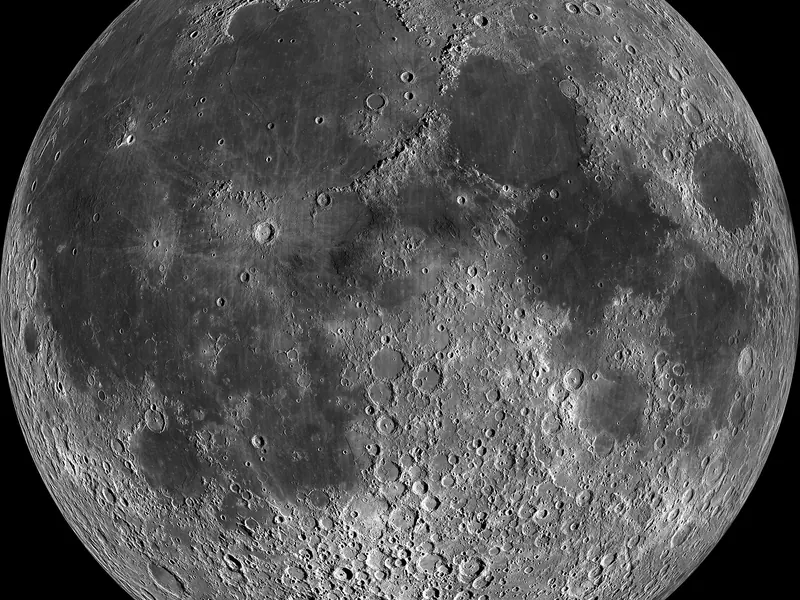
What did the Moon look like the day you were born?
Put in any date from 1901 to 2100. We look it up in NASA’s own table of Moon phases, draw the Moon for that day and find the next time a full Moon lands on it. Nothing leaves your browser.
Pick a date to see its Moon
–
- Next full Moon (your time)
- –
- Next new Moon (your time)
- –
How it works: phase dates and times are from NASA’s phase tables for 1901 to 2100, by Fred Espenak NASA GSFC: Phases of the Moon, 2001 to 2100 (F. Espenak), in Universal Time. The table lists the four main phases; between them we work out the shape and “% lit” ourselves, so those are estimates, not official figures. The month between new Moons varies from 29.26 to 29.80 days NASA GSFC: Phases of the Moon, 2001 to 2100 (F. Espenak). Weight × 0.165, the Moon’s surface gravity compared with Earth’s NASA NSSDC: Moon fact sheet. The drawing shows the Moon as seen from the Northern Hemisphere; from the Southern Hemisphere it looks upside down NASA Science: Top Moon questions.
The short version
The Moon is Earth’s only natural satellite. NASA Science: Moon facts The Moon isn’t a planet. It’s a natural satellite: a space object that orbits around something else. NASA Science: Top Moon questions
Put a green pea next to a US nickel (a 5-cent coin) and you have a good idea of the size of the Moon compared to Earth. NASA Science: Moon facts With a radius of about 1,740 km, the Moon is less than a third of the width of Earth. NASA Science: Moon facts
The Moon doesn’t make its own light. Moonlight is sunlight reflected off the Moon’s surface. NASA Science: Top Moon questions The Moon spins once on its axis in the same time it takes to go once around Earth, so the same side always faces us. NASA Science: Moon facts
The Moon probably formed after a Mars-sized body crashed into the young Earth. Debris from both came together to make the Moon. NASA Science: Moon facts The Moon is the only place beyond Earth that people have visited, so far. NASA Science: Moon facts · checked 26 Oct 2026
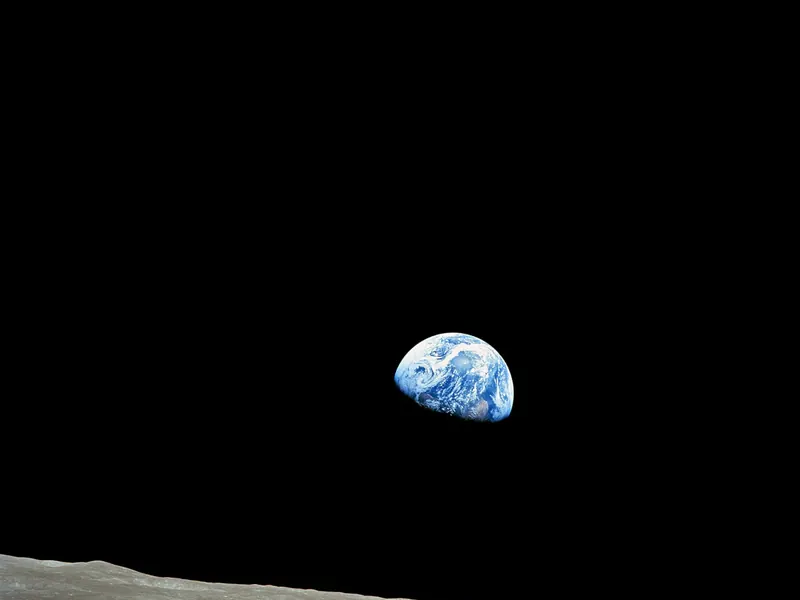
Explore the Moon
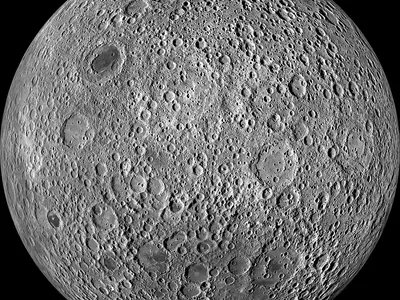 The MoonSize, distance, gravity, and what’s inside.
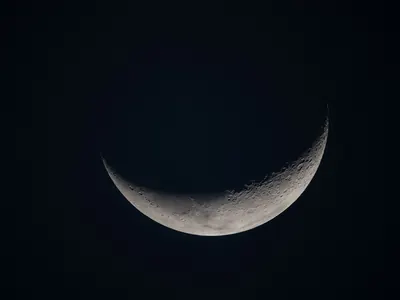 Phases, tides & eclipsesWhy it changes shape, and what it does to the sea.
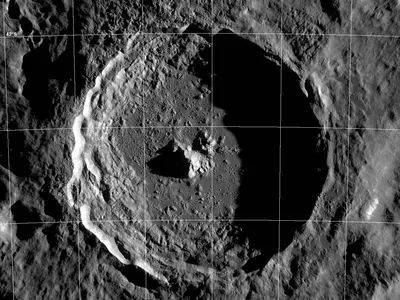 The surfaceCraters, lava “seas”, dust and ice.
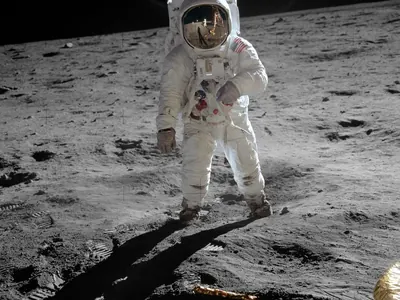 MissionsFrom Luna 2 in 1959 to Artemis II in 2026.
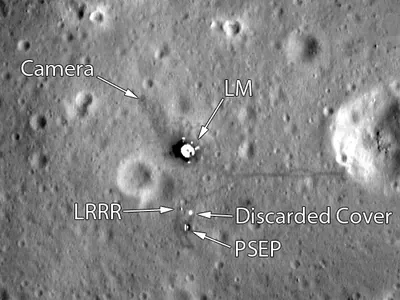 Myths vs factsThe dark side, the giant horizon Moon and more.
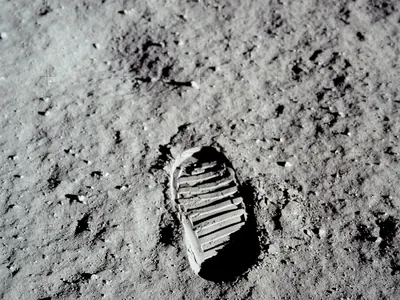 The big facts pageEvery fact on the site, each one checked against NASA.
Tile images are credited on their pages and on the credits page.
Things to play
Enjoying the Moon? Help keep the lights on.
This site is hand-built, fact-checked and free to read. If a fact, a game or one of Useless’s notes made you smile, a little support keeps it going and helps the network grow.
Moon printables
Fact-checked PDFs in A4 and US Letter, sold as instant downloads from the ReallyByte store.
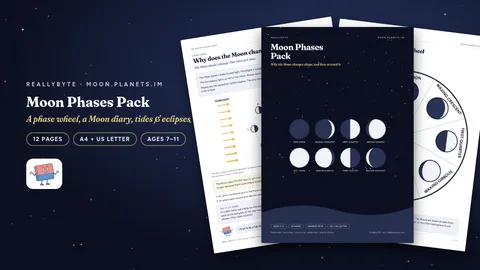
Moon Phases Pack
A phase wheel to make, a Moon diary, all eight phases to cut and order, and a tides and eclipses page, with answer keys
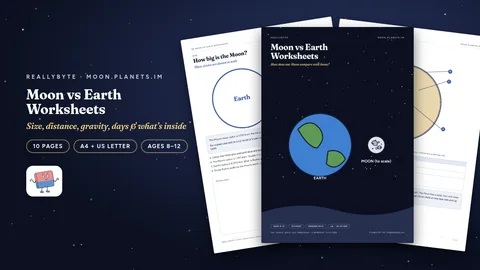
Moon vs Earth Worksheets
Size, distance, gravity, days and temperatures compared, with Moon-maths, labelling and answer keys
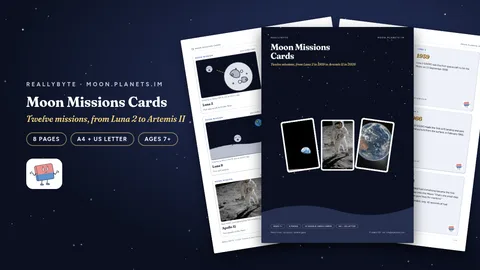
Moon Missions Cards
Twelve double-sided cards, from Luna 2 in 1959 to Artemis II in 2026, plus a timeline game
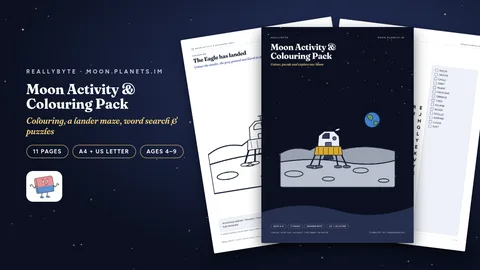
Moon Activity & Colouring Pack
Colouring scenes, a lander maze, word search and puzzles for ages 4 to 9
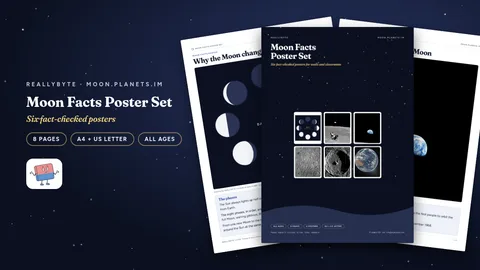
Moon Facts Poster Set
Six fact-checked posters, from the phases to the 30 seconds of fuel left on Apollo 11
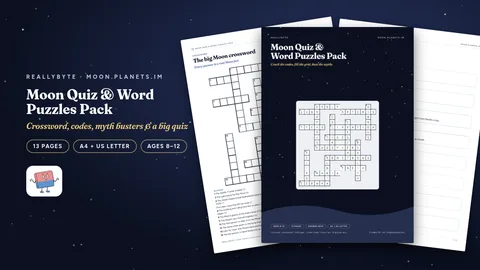
Moon Quiz & Word Puzzles Pack
A crossword, code breaker, fill-the-gap facts, number match, myth busters and a 16-question quiz, with answer keys
 Best value
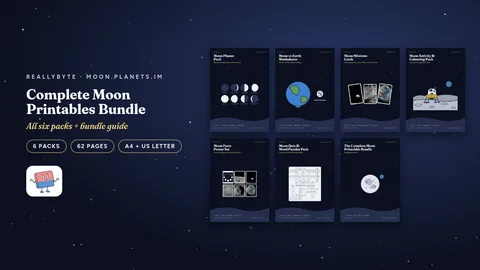
The Complete Moon Printables Bundle
All six packs plus a guide, A4 and US Letter, in one download.