Craters, seas and dust
Grey rock, dark lava plains, bright craters and ice in places the Sun never reaches. No wind has ever tidied any of it up.
Craters everywhere
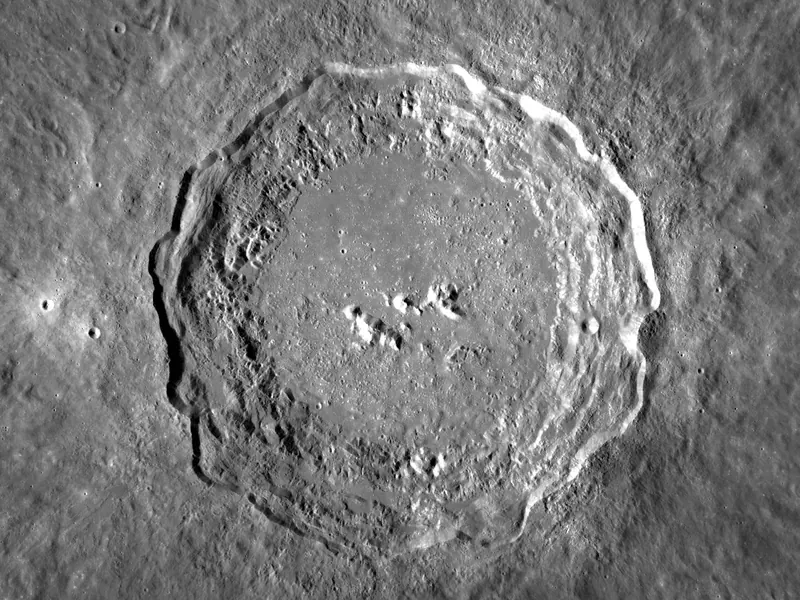
The Moon is covered in craters from asteroids, meteoroids and comets. There’s too little air to slow them down. NASA Science: Moon facts With no wind or air to wear them away, the Moon’s craters stay for a very long time. NASA Space Place: All about the Moon
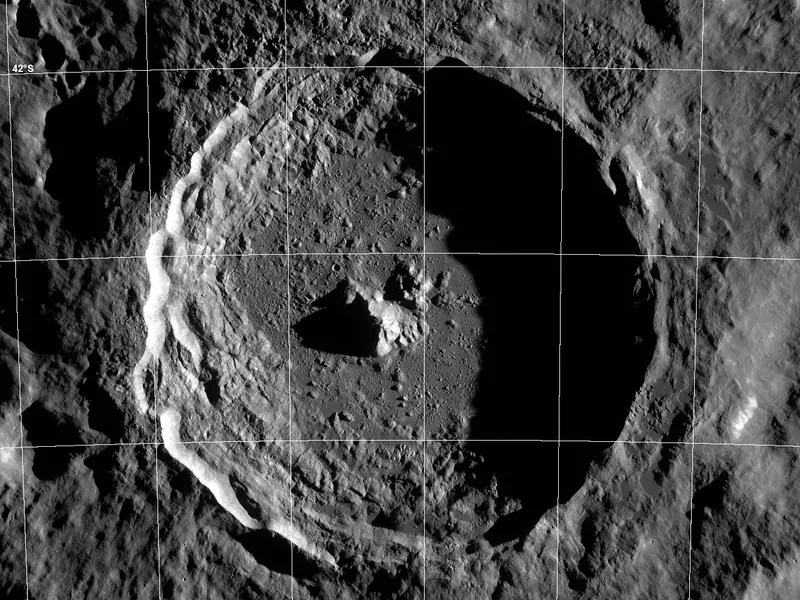
Tycho Crater is more than 85 km wide. NASA Science: Moon facts
The dark ‘seas’
The dark patches are called maria, Latin for ‘seas’. They’re huge basins that filled with lava between 4.2 and 1.2 billion years ago. NASA Science: Moon facts The light areas are called the highlands. NASA Science: Moon facts
The Moon’s ‘seas’ aren’t water. They’re old lava. NASA Space Place: All about the Moon
Dust and rubble
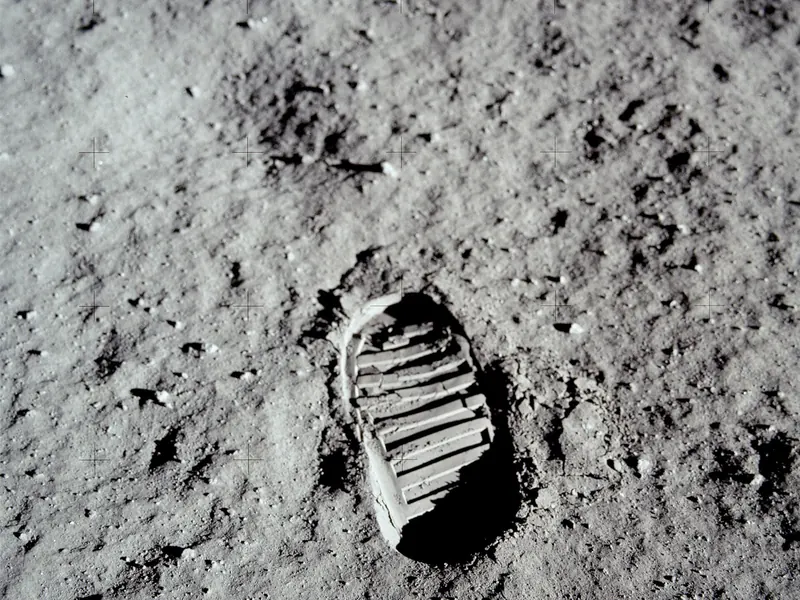
Nearly the whole Moon is covered in charcoal-grey powdery dust and rocky rubble called regolith. NASA Science: Moon facts The finest Moon dust is smaller than 10 to 20 microns, much thinner than a human hair. NASA Science: What the Moon is made of
On the old highlands, the regolith can be 20 metres deep. NASA Science: What the Moon is made of
How bright is it really?
Only about a tenth of the sunlight that hits the Moon bounces back. From Earth it looks bright, almost white, but much of its surface is really shades of dark grey. NASA Science: Moonlight
Water and ice
The first definitive discovery of water on the Moon was made in 2008 by India’s Chandrayaan-1 mission. NASA Science: Moon facts There is water ice in permanently shadowed craters at the Moon’s poles, where sunlight never reaches. NASA Science: Moon facts
In 2009 NASA’s LCROSS spacecraft fired a projectile into a crater, then flew through the debris and found grains of water ice in it. NASA Science: Water and ices on the Moon
In October 2020 NASA’s SOFIA observatory confirmed water on the sunlit surface of the Moon for the first time, in Clavius Crater. NASA Science: Moon facts
Things left behind
Astronauts left things behind on the Moon: equipment, American flags and even a camera. NASA Science: Moon facts
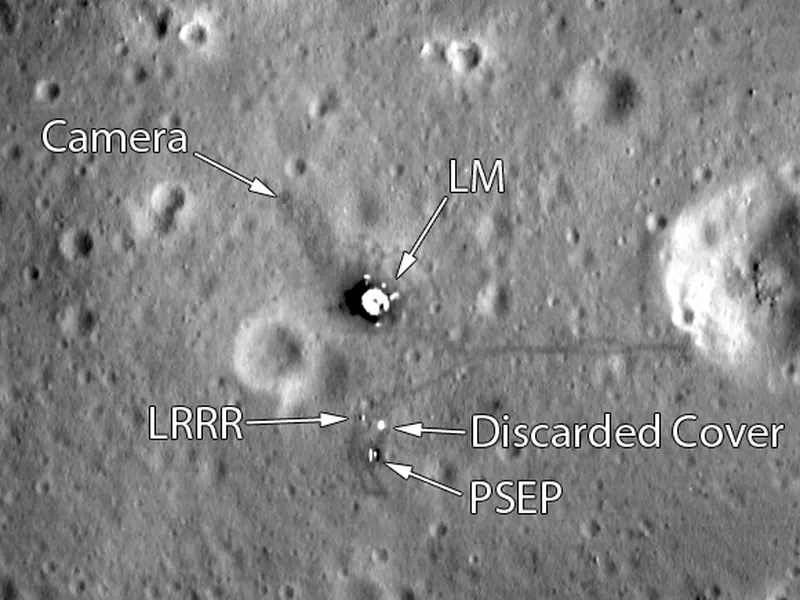
LRO has photographed the Apollo 11 landing site: the descent stage left behind is visible, and so are the trails of the astronauts’ footprints. NASA Science: Apollo 11 landing site, seen by LRO
Is anything alive?
Missions to the Moon have found no evidence that it has living things of its own. NASA Science: Moon facts
Next: missions →