From Luna to Artemis
Robots first, then twelve people, then a long pause, then a lot of robots again. In April 2026, four astronauts went back around.
More than 105 robotic spacecraft have been launched to explore the Moon. NASA Science: Moon facts · checked 26 Oct 2026
The first robots
Nobody saw the far side of the Moon until a Soviet spacecraft flew past in 1959. NASA Science: Moon facts
Luna 2 (USSR) was the first spacecraft to hit the Moon, on 13 September 1959. NASA Science: Moon missions Luna 3 (USSR) took the first pictures of the far side in October 1959. NASA Science: Moon missions
Luna 9 (USSR) made the first soft landing and sent the first picture from the surface, in February 1966. NASA Science: Moon missions
Apollo 8: Earthrise
Apollo 8’s crew, Frank Borman, Jim Lovell and Bill Anders, were the first people to orbit the Moon, on Christmas Eve 1968. NASA: Apollo 8
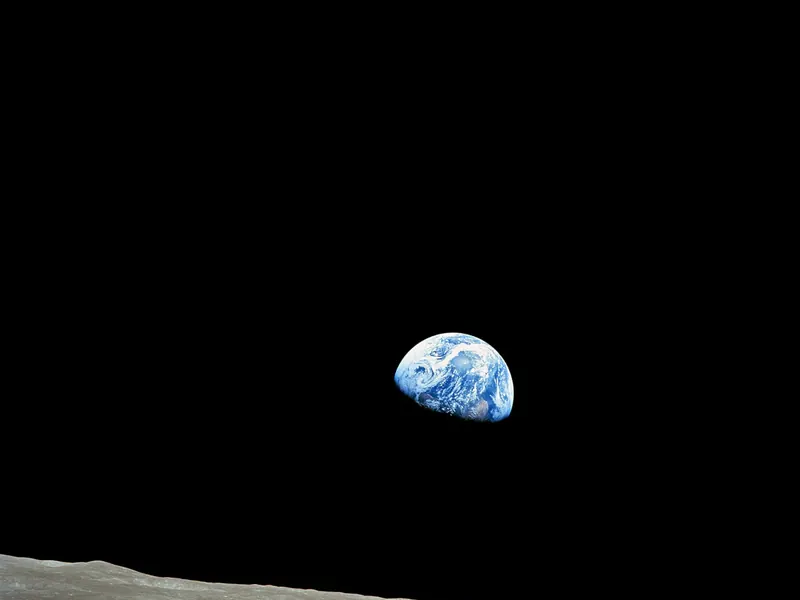
Bill Anders took the ‘Earthrise’ photo from lunar orbit on 24 December 1968. NASA: Apollo 8
Apollo 11: the landing
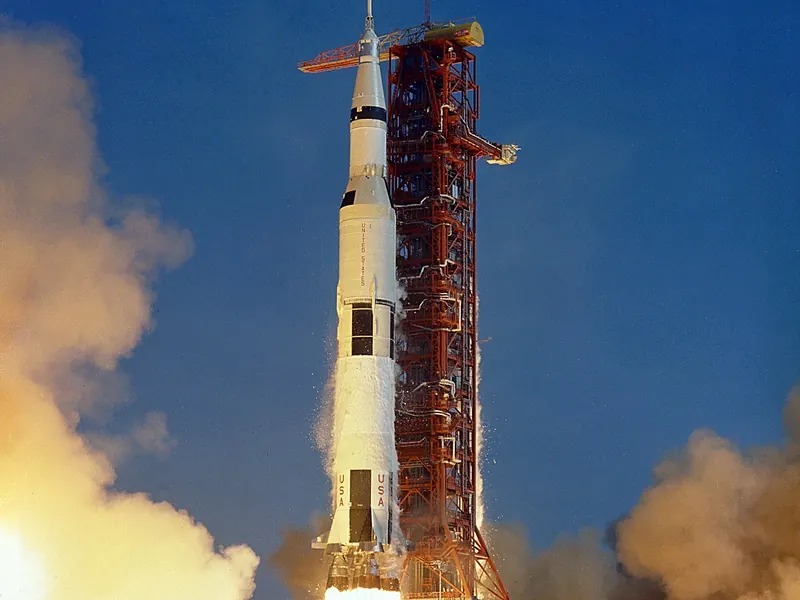
Apollo 11 launched on 16 July 1969 with Neil Armstrong, Michael Collins and Buzz Aldrin. NASA: Apollo 11 mission overview
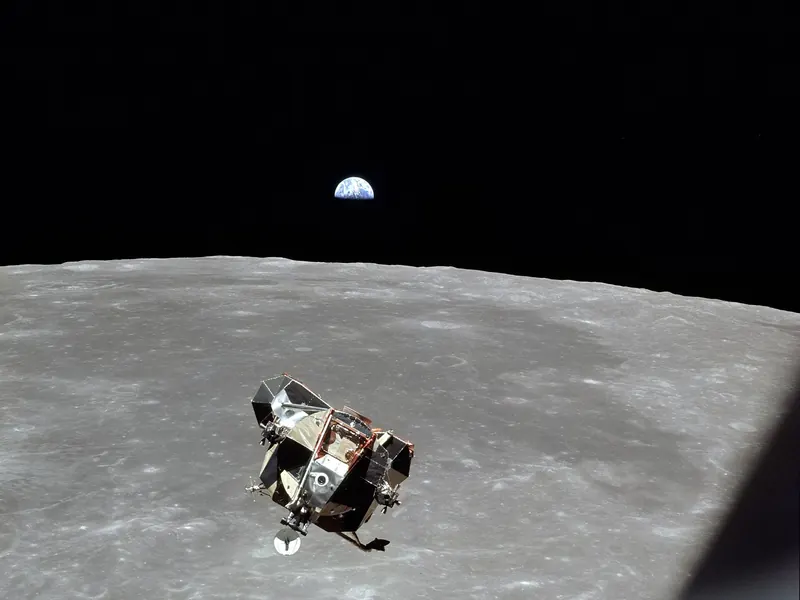
Landing the lunar module Eagle in the Sea of Tranquility, Armstrong flew it by hand past an area littered with boulders. NASA: July 20, 1969, One Giant Leap for Mankind When Eagle landed, only 30 seconds of fuel remained. NASA: July 20, 1969, One Giant Leap for Mankind
Armstrong radioed: “Houston, Tranquility Base here. The Eagle has landed.” NASA: July 20, 1969, One Giant Leap for Mankind
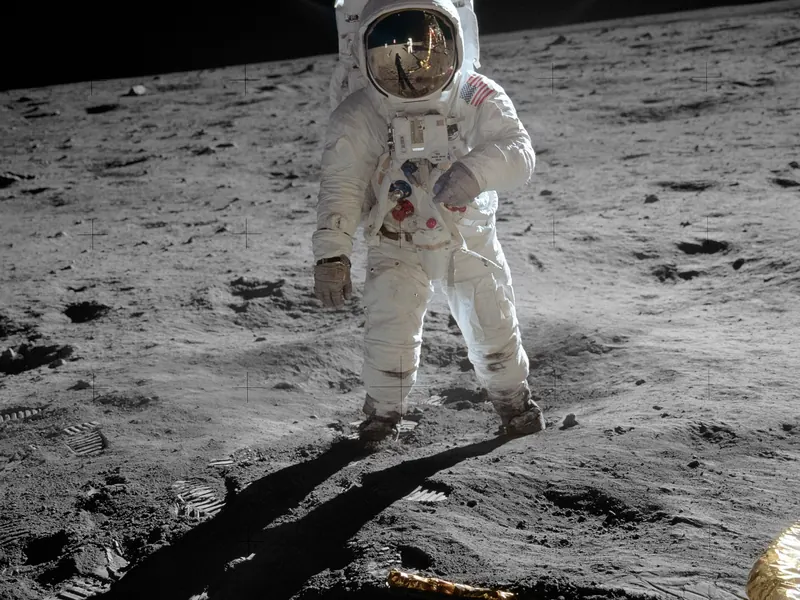
On 20 July 1969 Neil Armstrong became the first person to step onto the Moon: “That’s one small step for a man, one giant leap for mankind.” NASA: July 20, 1969, One Giant Leap for Mankind An estimated 650 million people watched on television. NASA: Apollo 11 mission overview
Aldrin described the surface as “magnificent desolation”. NASA: July 20, 1969, One Giant Leap for Mankind Armstrong and Aldrin spent 21 hours, 36 minutes on the Moon’s surface. NASA: Apollo 11 mission overview
Michael Collins stayed in lunar orbit in the command module, Columbia. NASA: Apollo 11 mission overview
Twelve moonwalkers
Twelve people have walked on the Moon, starting with Neil Armstrong and Buzz Aldrin. NASA Science: Who has walked on the Moon? 24 American astronauts travelled from Earth to the Moon between 1968 and 1972. NASA Science: Who has walked on the Moon?
Three astronauts went to the Moon twice: James Lovell, John Young and Gene Cernan. NASA Science: Who has walked on the Moon?
Apollo 13 couldn’t land, but its crew returned safely to Earth. NASA Science: Moon missions
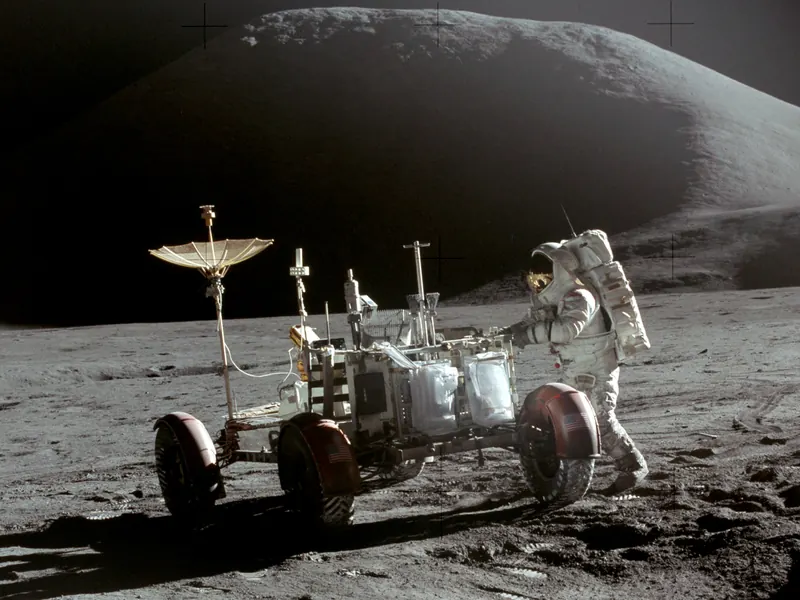
Apollo 15, in 1971, was the fourth Moon landing mission and the first to use a lunar rover. NASA: Apollo 15
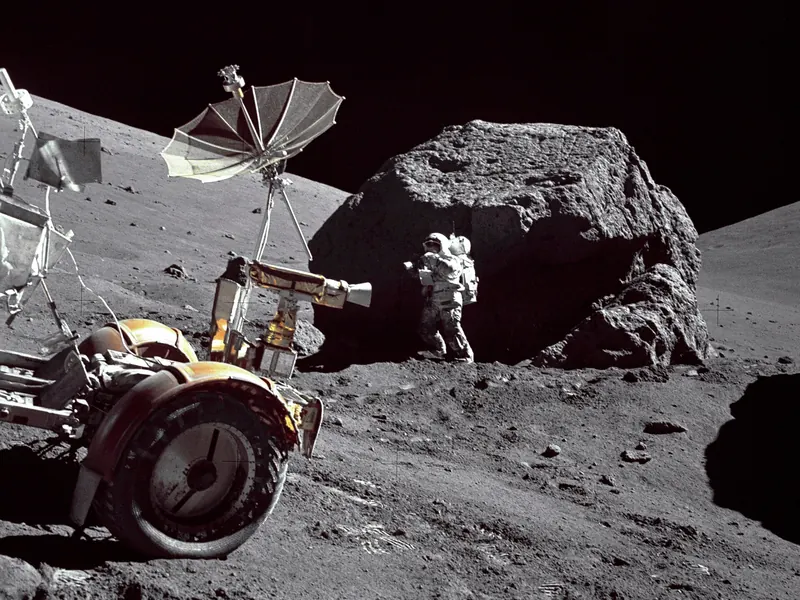
Apollo 17, in December 1972, was the last Apollo Moon landing and the first with a scientist on board, geologist Harrison Schmitt. NASA Science: Moon missions Gene Cernan, Apollo 17’s commander, was the last person to leave footprints on the Moon. NASA: Apollo 17
Apollo astronauts brought back 382 kg of Moon rocks and soil. Scientists are still studying them. NASA Science: Moon facts
The robots come back
Lunokhod 1 (USSR, 1970) was the first robotic rover to explore another world. NASA Science: Moon missions
NASA’s Lunar Reconnaissance Orbiter has been studying the Moon up close since 2009, the longest-lived lunar orbiting mission ever. NASA Science: Lunar Reconnaissance Orbiter · checked 26 Oct 2026
China’s Chang’e 4 and its rover Yutu 2 made the first landing on the far side, in January 2019. NASA Science: Moon missions India’s Chandrayaan-3 was the first spacecraft to soft-land near the lunar south pole, in August 2023. NASA Science: Moon missions
China’s Chang’e 6 brought back the first samples from the far side, in 2024. NASA Science: Moon missions
Artemis
Artemis I (November 2022) was the first flight test of NASA’s SLS rocket and Orion capsule, with no crew. NASA Science: Moon missions
Artemis II launched on 1 April 2026 and splashed down on 10 April 2026, after 9 days, 1 hour and 32 minutes. NASA: Artemis II Its crew, NASA astronauts Reid Wiseman, Victor Glover and Christina Koch and Canadian astronaut Jeremy Hansen, travelled around the Moon. NASA Science: Who has walked on the Moon?
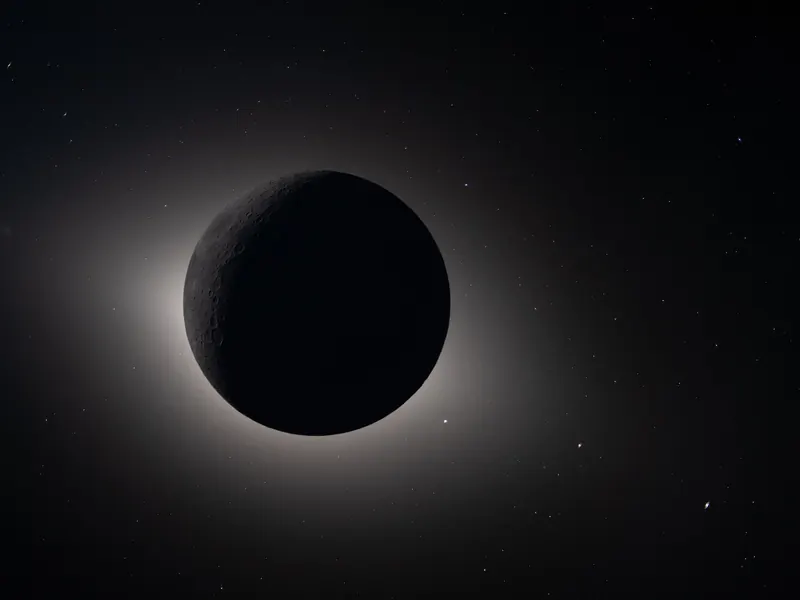
Artemis II carried its four astronauts around the far side of the Moon, flying past on 6 April 2026. NASA Science: Moon missions
Timeline
- 1959 Luna 2 (USSR) was the first spacecraft to hit the Moon, on 13 September 1959. NASA Science: Moon missions
- 1959 Luna 3 (USSR) took the first pictures of the far side in October 1959. NASA Science: Moon missions
- 1966 Luna 9 (USSR) made the first soft landing and sent the first picture from the surface, in February 1966. NASA Science: Moon missions
- 1968 Apollo 8’s crew, Frank Borman, Jim Lovell and Bill Anders, were the first people to orbit the Moon, on Christmas Eve 1968. NASA: Apollo 8
- 1969 Apollo 11 launched on 16 July 1969 with Neil Armstrong, Michael Collins and Buzz Aldrin. NASA: Apollo 11 mission overview
- 1970 Apollo 13 couldn’t land, but its crew returned safely to Earth. NASA Science: Moon missions
- 1970 Lunokhod 1 (USSR, 1970) was the first robotic rover to explore another world. NASA Science: Moon missions
- 1971 Apollo 15, in 1971, was the fourth Moon landing mission and the first to use a lunar rover. NASA: Apollo 15
- 1972 Apollo 17, in December 1972, was the last Apollo Moon landing and the first with a scientist on board, geologist Harrison Schmitt. NASA Science: Moon missions
- 2008 The first definitive discovery of water on the Moon was made in 2008 by India’s Chandrayaan-1 mission. NASA Science: Moon facts
- 2009 NASA’s Lunar Reconnaissance Orbiter has been studying the Moon up close since 2009, the longest-lived lunar orbiting mission ever. NASA Science: Lunar Reconnaissance Orbiter · checked 26 Oct 2026
- 2019 China’s Chang’e 4 and its rover Yutu 2 made the first landing on the far side, in January 2019. NASA Science: Moon missions
- 2022 Artemis I (November 2022) was the first flight test of NASA’s SLS rocket and Orion capsule, with no crew. NASA Science: Moon missions
- 2023 India’s Chandrayaan-3 was the first spacecraft to soft-land near the lunar south pole, in August 2023. NASA Science: Moon missions
- 2024 China’s Chang’e 6 brought back the first samples from the far side, in 2024. NASA Science: Moon missions
- 2026 Artemis II launched on 1 April 2026 and splashed down on 10 April 2026, after 9 days, 1 hour and 32 minutes. NASA: Artemis II
Can you do what Armstrong did, with the fuel running out? Fly the Lunar Lander →
Next: myths vs facts →